
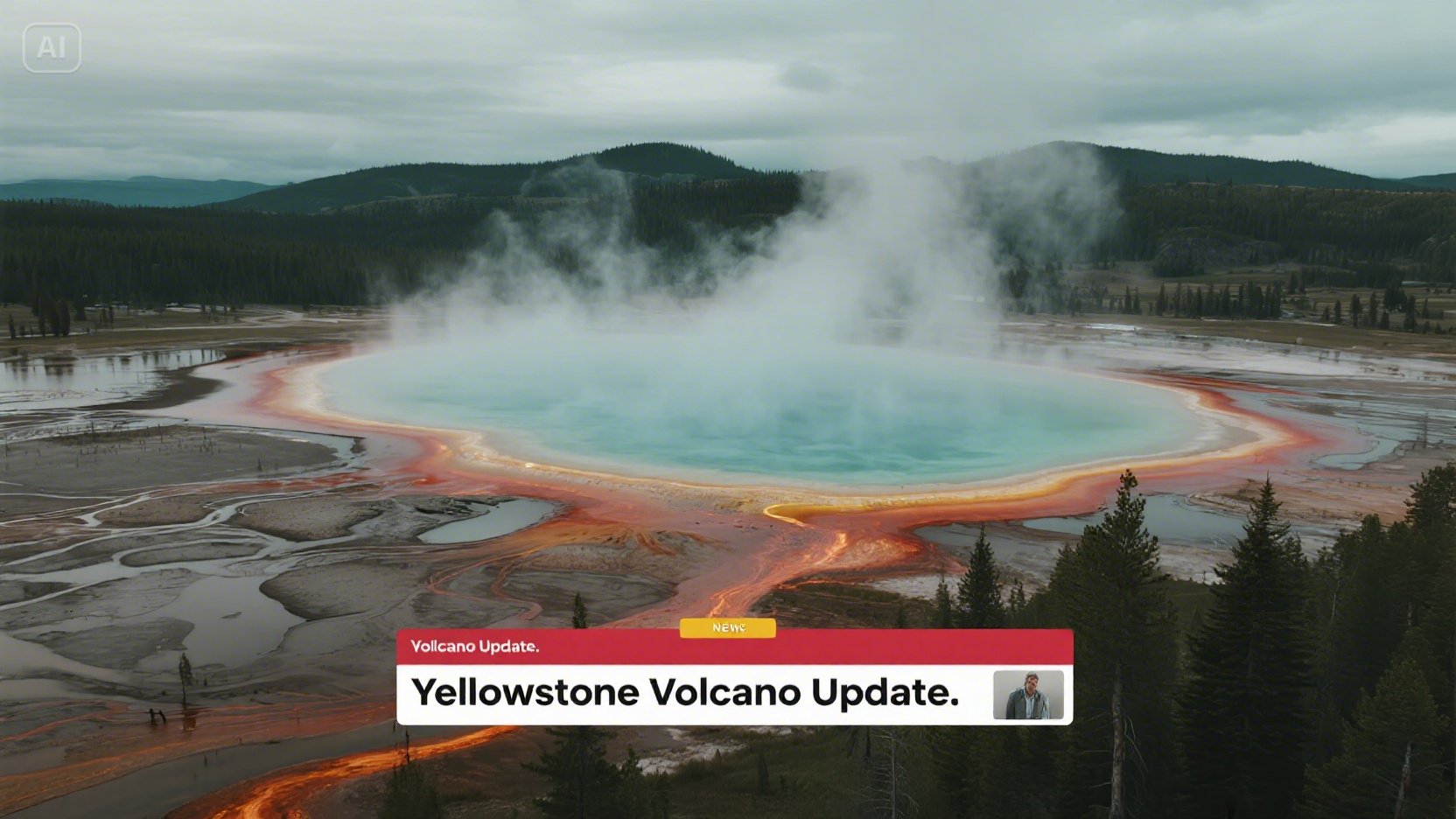
The Yellowstone supervolcano is one of the most fascinating and closely watched geological features in the world. Beneath Yellowstone National Park, this massive volcanic system is continuously monitored by scientists due to its potential impact on the environment and human life. Recent Yellowstone volcano news brings new findings and updates about the activity of the volcanic system, helping experts and the public stay informed about any changes. In this article, we will explore the latest developments, ongoing research, and what the current data means for the region and beyond.
Table of Contents
Understanding the Yellowstone Volcano
Yellowstone is a supervolcano, meaning it has the capability to produce an eruption of extraordinary size and impact. Geologists explain that the volcano is fueled by a hotspot—a plume of hot material rising from deep within the Earth’s mantle. Over millions of years, this hotspot has caused repeated large eruptions and shaped the landscape we see today, including the iconic caldera that spans roughly 30 by 45 miles.
Though there have been three major eruptions over the last 2.1 million years, the most recent massive eruption occurred approximately 640,000 years ago. Since then, the activity has primarily been characterized by smaller hydrothermal events such as geysers, hot springs, and occasional minor seismic events. Because of Yellowstone’s history and potential risks, it remains a crucial subject for ongoing scientific observation.
Recent Yellowstone Volcano News Highlights
The latest Yellowstone volcano news has centered around advances in monitoring technology, small seismic occurrences, and measurements of ground deformation. Scientists use multiple tools—including seismometers, GPS stations, and satellite imagery—to track any signs of volcanic unrest.
Seismic Activity and Earthquakes
Over the past few years, the Yellowstone region has experienced thousands of small earthquakes annually, typically too weak to be felt by people. These microearthquakes often occur as swarms, which can signal adjustments in the magma chamber or shifts in the geological structure beneath the surface. Recent swarm activity has captured attention, with clusters near the Norris Geyser Basin, an area known for geothermal activity.
However, experts caution that current seismic patterns are consistent with normal volcanic behavior and do not indicate an imminent eruption. These tremors are part of the natural dynamic processes driving the Yellowstone geothermal system.
Ground Uplift and Deformation
Advanced monitoring systems have detected subtle changes in the elevation of the Yellowstone caldera floor. Ground uplift – a rising of the surface – can occur when magma or hydrothermal fluids accumulate beneath the ground. Over the past decade, measurements have shown periods of both inflation and deflation, reflecting the complex balance of internal pressures.
According to recent Yellowstone volcano news, the current rate of uplift is well within historical norms and does not suggest uncommon activity. Continuous GPS data helps scientists understand these patterns, contributing to a more accurate assessment of the volcano’s behavior over time.
Scientific Research and Monitoring Efforts
Collaboration between the U.S. Geological Survey (USGS), Yellowstone Volcano Observatory (YVO), and various academic institutions plays a vital role in producing up-to-date Yellowstone volcano news. These organizations rely on a network of instruments strategically deployed throughout the park to gather comprehensive geological, chemical, and geophysical data.
Research initiatives include:
- Seismic Monitoring: Detecting and locating earthquakes to analyze patterns and potential changes.
- Gas Sampling: Measuring emissions of volcanic gases like carbon dioxide and sulfur dioxide, which can indicate changes underground.
- Thermal Imaging: Observing temperature fluctuations across hydrothermal features to detect any unusual heating.
- Remote Sensing: Using satellites to monitor surface deformation and large-scale environmental changes.
These multidisciplinary approaches not only improve the early warning capabilities but also enhance our understanding of supervolcano dynamics.
What Does This Mean for Yellowstone and the Surrounding Area?
While Yellowstone’s status as a supervolcano naturally inspires concern about potential eruptions, the scientific community emphasizes that the current Yellowstone volcano news indicates no immediate threat. The monitoring data show that the volcano is behaving within expected parameters and that any future eruption would likely give warning signs ranging from increased seismic activity to accelerated ground deformation.
Experts also point out that Yellowstone’s volcanic system has a long dormancy period between large eruptions, often lasting hundreds of thousands of years. The modest activity observed today primarily fuels the park’s famous hot springs, mud pots, and geysers, which attract millions of visitors yearly.
Read More: ROTEL – Urban Boutique Hotel: Where Comfort Meets Kutaisi’s Vibrant Energy
Public Preparedness and Awareness
Despite the low probability of a major eruption in the near future, officials recommend that residents and visitors stay informed about Yellowstone volcano news and emergency protocols. The USGS and Yellowstone Volcano Observatory maintain public websites that provide updates, educational resources, and real-time data.
Preparedness efforts include understanding evacuation routes, maintaining emergency supplies, and following guidance from local authorities in the event of increased volcanic activity.
Conclusion
Yellowstone remains one of the planet’s most impressive and studied volcanic systems. The continuous flow of Yellowstone volcano news reflects the commitment of scientists worldwide to unravel the mysteries of this supervolcano while ensuring public safety. Thanks to sophisticated monitoring and ongoing research, any significant changes in Yellowstone’s volcanic activity are likely to be detected well in advance, allowing ample time for response.
Staying updated on Yellowstone volcano news is essential for anyone interested in geology, natural hazards, or the spectacular landscape of Yellowstone National Park. With a combination of vigilance, science, and education, we can appreciate this incredible natural wonder safely and responsibly.
Apart from that, if you want to know more about Experience the Best Coastal Drives in the USA and Singapore then visit our Travel category.
For those interested in understanding more about geological systems, we recommend checking out our article Beyond Buzzwords: How Business Growth Action Helps Smes Turn Strategy Into Systems.